Tuesday, January 3, 2012

Savannah, GA

We made it to Savannah in time for Thanksgiving. Parked out behind Keller's Flea Market, we had a covered pavillion for our Thanksgiving feast. I cooked the turkey and stuffing and everyone else provided the rest of the meal.

Our banquet table.
Enjoying the meal.


While in the area we visited several forts. But on the way we stopped to have lunch. Someone recommended The Crab Shack..
 

It also has an alligator lagoon. These are real.

Oh No, I think one got loose. (Just kidding, it's stuffed)

We weren't in our bare feet, but they served us anyway.

They said there are approximately 11 cats which they feed everyday.

The Tybee Island Lighthouse. Although this lighthouse is the 3rd edition, built in 1773, the original Tybee Lighthouse, built in 1736, was one of the first public structures in Georgia. It is still operational today.

Across the street from the lighthouse is Fort Screven, built in 1898. It saw continuous use through the Spanish-American War and both World Wars. It was primarily a coastal artillery fort, it was also used a school for deep sea diving.

Tybee Island is best known for its beaches.

Fort Pulaski is located on Cockspur Island, across from Tybee Island.

It is most known for the place the Union Army first tested the rifled cannon in 1862. The rifled cannon could shoot with more force and rendered the exisiting brick forts obsolete. Here are some of the shell marks still left in the remaining walls. But much of the wall was breached completely and has since been rebuilt. The fort was built in 1833 by a young lieutenent not long out of West Point, Lieutenent Robert E. Lee.

Fort James Jackson, restored as it looked when built in 1808, served until 1905.
All three of these forts were built to provide security for Savannah's harbor.


Another interesting place nearby was the Wormsloe Plantation. These pillars were built at the gate of the plantation.

You then travel down a tree lined road for almost a mile before coming to the plantation itself. The original plantation buildings were built in 1736 out of Tabby, by one of Georgia's colonial founders, Noble Jones. Tabby, a mixture of limestone and shells, was a common building material in the 18th century on the east coast.

This is all that is left of the original buildings. It was a fortress home, 1.5 stories with 5 rooms, walled with bastions on the corner. In 1828, Noble's grandson, U.S. Senator George Jones, built a new, more elaborate home on the property. The original fortress home was left to decay.

Another type of home built during this time was called, wattle and daub, was also used.

It consisted of a woven lattice of wooden strips which are then daubed with mud or mud and limestone. This form of construction has been used for over 6000 years and again is becoming popular as a low impact, sustainable building technique.

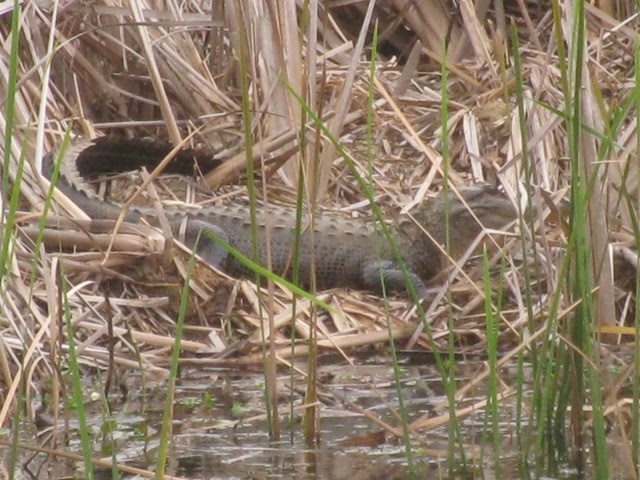
Across the river from Savannah, actually located in South Carolina, is the Savannah Wildlife Refuge. In what used to be rice patties from a long ago plantation, is now a popular spot with birds and alligators.

This cistern is about all that is left of the servants quarters who farmed the rice patties.
My next blog will be on downtown Savannah.

Monday, November 28, 2011

Charleston, SC and its forts

There are actually a number of forts in the area and we visited most of them. Some are just a few ruins and some are reconstructed and a few were used until after WWII and are in pretty good shape. So here are a few highlights.

This Anglican Church was erected in 1717 in old historic Dorchester and burnt during the revolutionary war.
These are the ruins of Fort Dorchester, built in 1757, taken by the British in 1780 and taken back by the Patriots in Dec. 1781. The town of Dorchester was originally laid out in 1697 as a market town for a congregationalist community. The town declined following the revolution and was eventually abandoned.

South of town is Folly Beach, which was so fogged in, we couldn't hardly see the water from the fishing pier and the county park was closed due to damage from the recent hurricane. But the city park was open, so we stopped there to eat our picnic lunch (a Subway sandwich). We found these delightful frogs to have lunch with.

I think this one was secretly coveting my sub sandwich.

Here is the fogged in beach.

But just out of town was the location of Fort Lamar. There is nothing left now but a few signs and some trails describing the fort and the part it played in the Civil War. It was established to protect one of the riverways into Charleston. The confederates succesfully stopped a union advance into Charleston in 1862.

Fort Johnson was located nearby on the coast, at the front of Charleston harbor. It was one of several forts with the purpose of protecting Charleston's harbor. But Fort Johnson was the site where the first shot was fired in April 1861 by the confederates, against Fort Sumter, held by the union. It was the shot which started the Civil War.

Standing on the harbor shore at Fort Johnson looking across to Fort Sumter.

Ft. Moultrie is located on Sullivan Island on the north side of Charleston Harbor. Ft. Moultrie was a major sea coast defense from 1776-1947. Yes, it actually played a part in the Revolutionary War, the War of 1812, the Mexican American War, the Spanish American War, the Civil War, WWI and WWII. It was modified and rebuilt several times, but the major walls and much of the fort is over 200 years old.

Across the street was this church, which was built in the 1800s. Sullivan Island was important in the era of slavery. This is where thousands of african slaves were brought to America and here on the island they went through a 3 week quarantine before being taken to the slave auctions in Charleston.

I love the south, you have palm trees and live oaks. Palm trees mean warm weather, yeah.
...
This was part of WWII harbor observation post. Underneath was the underground headquarters of the Navy's Harbor Entrance Control Post and the Army's Harbor Defense Command Post. With technological advances it was determined the base was obsolete and was closed following WWII.

The Yorktown Aircraft Carrier is on display in Charleston Harbor.

Built in 1810, Pinkney Castle is located in the harbor. It has been a holding place for slaves coming into Charleston for auction, and it was a prisoner of war camp during the Civil War. It is only accessible by boat, but is open to the public for picnicing only, the ruins are not open.

Fort Sumter is only available by boat. The tour of the fort by the National Park service includes an 1 1/2 hour narrated harbor tour. This is where the Civil War started. The union held this fort and the confederates wanted it back. The union wouldn't surrender. The confederates seiged the fort and wouldn't allow provisions to be provided. In April 1862 the confederates finally fired on the fort and the next day the union soldiers surrendered. It was held throughout the rest of the war by the confederate army, even surviving a 22 month long seige by union forces, the longest seige in all history.

This battery, Battery Huger, inside Fort Sumter, was built in the late 1898 for the Spanish American War. It never saw use.

A gun like, this 10 in morter, fired the first shot from Fort Johnson onto Fort Sumter in April 1861, starting the Civil War.

Some guns fired a much larger projectile. Max could even get his head in this one.

Some of the walls in Fort Sumter still have the projectiles which were fired into the fort by the union army during its 22 month seige.

Looking at downtown Charleston from the fort harbor.

The U.S. Customs House from the harbor. It is still in use today.

Sunday, November 27, 2011

Charleston, SC

Charleston was one of the prettiest southern towns I've seen. It truly shows the elegance of a time gone by with its old, southern style homes. And then there is the Port of Savannah, which even today, is still the 4th busiest port in the U.S. but early in its history, it was a critical factor in both the Revolutionary War and the Civil War. It will take me several blogs to share all that I explored in Charleston. But I will start with the Oyster Roast at the Elks Lodge.
We arrived just in time to attend the annual oyster roast. Here are the bags of fresh oysters, ready to be steamed for the roast.

 
Here they are getting ready to put the steaming baskets in the steamer.

And here we are helping ourselves to our first basket of steamed oysters. They have this down pat. Notice the holes in the tables? There is a trash can underneath for your oyster shells (oyster shells are always recycled). You get your bucket, find an empty spot along the table and start shucking those oysters.

I had only had fried oysters before this, and I think I like these.

Max even had his share. Between the three of us, Max, Tom and myself, we finished off 3 buckets of oysters. Sounds like a lot, but I watched many there finish off 3 buckets all by themselves. They also had fish stew and hotdogs (which I was told you had to eat with chili). We had lots of fun and felt like we really got to participate in a 'local' activity.

The Angel Tree is located just south of town. It is estimated to be 300-400 years old, although legend says it is over 1500 years old. Live Oaks only live to be approximately 500 years old, and this tree can trace its history back to the 1700s. That's me standing underneath. Yes, it really is that large.

We also visited the only tea plantation in America. Notice how far it is to the some of the next closest tea plantation.

This is a tea plant. We got to take a tour of the tea processing plant, although it was on the weekend and it wasn't operating. Did you know the only difference between green tea, oolong tea and regular tea is the amount of time the tea is oxidized? I learned a lot about tea.

This is a tea harvester. The tea plant looks like a hedge and is dormant during the fall and winter. It starts growing in the spring and can be harvested every 10-14 days. The harvester simply goes over the top and cuts off all the new shoots, then the leaves are separated and the leaves are taken in for processing.

The holidays are near and the Festival of Lights was already going. It is 3 miles of displays with over 2 million lights.

I liked Santa on the motorcycle.

And I also liked this church. Needless to say, there were many, many more, but if you want to see them, you just need to go to Charleston.

Tuesday, November 22, 2011

Myrtle Beach, SC

Our stay in Myrtle Beach was a relaxing one. No real sightseeing, just some beach time and fun.

One of our fun outings was going to Wonderworks. I had seen Wonderworks in Orlando, but had no clue of what it was. Four of us went and had a blast. For those who have never heard of Wonderworks, it's a combination of hands on, interactive science museum along with a fun house.


This was harder than it looks. You have to pedal to made yourself go, and if you pedal enough you will go completely around. I added a movie at the end of the blog. I think I went around at least 3 times.

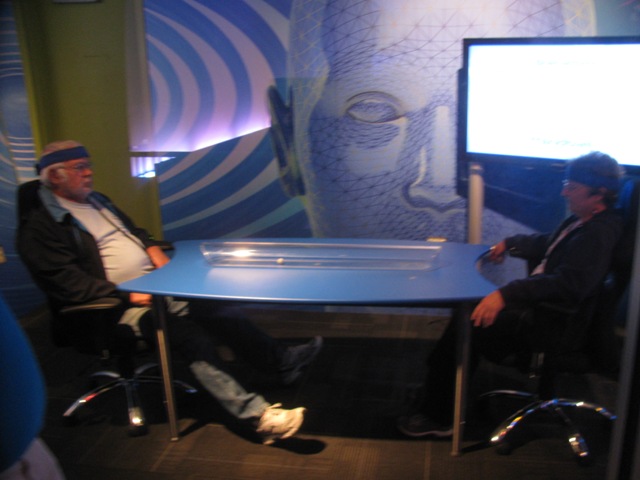
This was like your old fashion parlor tricks. It was supposed to be mind control. They placed a band around your head with wires attached. There was a ball (like a ping pong ball) in the center of the table. Whoever could relax the most would push the ball to the other person.

Up on the wall was a monitor showing what was supposed to be your brain wave activity. Believe it or not, I won.

But this rope challange was by far my favorite. Of course, the people you are seeing is not any of the 4 of us. We were all up there together, about 20-30 feet off the floor. You moved from platform to platform over a series of ropes, and planks. You were harnessed and couldn't really fall to the floor, but you could have fallen and dangled in the harness (although I never saw anyone do this). It was challenging, especially if you had any fear of heights. There were little kids and seniors like us, all up there taking the rope challenge.

This is only a few of the fun things. We played laser tag, rode in a roller coaster simulator (you even got to create your own ride), looked at ourselves in the trick mirrors and challenged ourselves with animated games.

But we also had some beach time. This was a nice little bar and grill on the beach. Since the busy season is over, it was quiet and not crowded.

I also got front shocks put on the motorhome and it drives so much better. Now to get the rear shocks. put on in Florida.


Friday, November 18, 2011

Wilmington, NC

We took a trolley tour of downtown historic Wilmington.

Now full of retail shops, this was once a warehouse at the port of Wilmington.

There are supposed to be over 100 pre-civil war homes in the area. This was once the governors mansion.

The church in the background has an unusual adornment on top of its steeple.

Instead of a cross, this church has a rooster.

Across the harbor was the battleship, USS North Carolina.

We got to the trolley about 5 minutes after it left, so we had to wait almost an hour for the next one. But right next door was a little restaurant and it was $2 Tuesdays. So we had $2 tacos and beer while we were waiting.

I'm not sure of the point Max was trying to make with this picture. Maybe how much more 'cool' my car is than the 1957 T-bird?

Ft. Fisher sits just south of town at the start of the harbor. It was an earthen fort built up for harbor defense during the Civil War. Until the end of the war it allowed blockade runners to stock and provision the Confederate Army. Some believe when this fort fell in early 1865, it was the beginning of the end for the Confederate Army. Nothing much is left but some reconstructed earthworks and some signs and a memorial statue.

At the Ft. Fisher State Recreation Area we found how they rescue you at the beach. They have taken a stretcher and modified it with the large tires for manuvering on the sand.

 Wilmington was noteworthy for me only because I had to get a wheel alignment, 2 new tires and arrangements for new shocks at the next town. I did learn something though, it can be very expensive to drive with bad shocks.